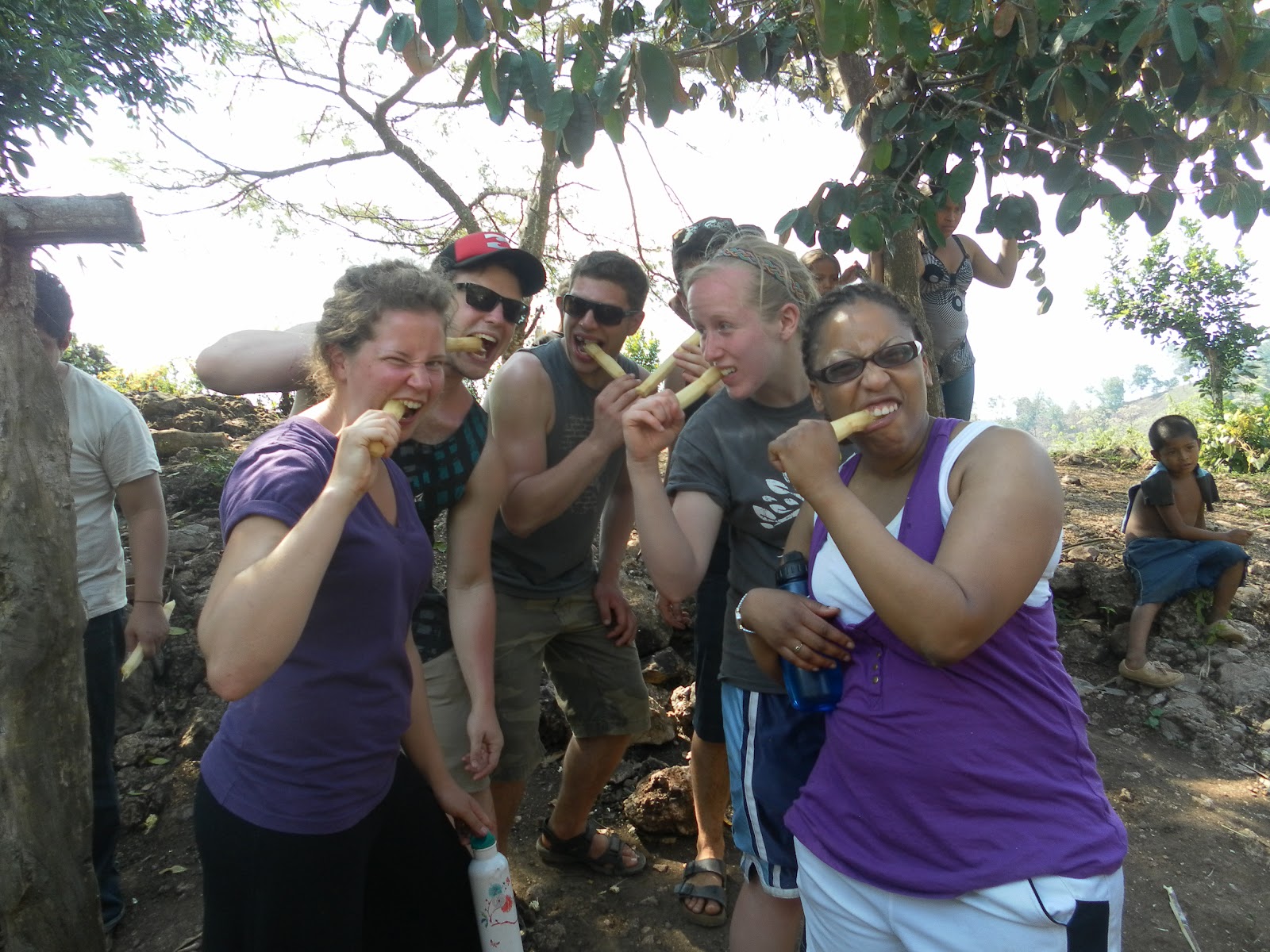
Only a few short days after the departure of the Inglewood team we had the privilege of hosting the team from Olympia, Washington for the 5th time in the community of Los Charcos. Olympia CRC may not send the biggest teams – ranging from 3 to 7 people – but they have certainly been faithful in their commitment to Los Charcos.
Over the years the church has kept in contact with the community by exchanging photos, letters and cards. Undeterred by their limited economic resources Olympia has always committed to some type of construction project per year. In the past they´ve done everything from pouring cement floors, constructing latrines and building pilas for washing and water storage. This year the eager Olympians took on a big challenge in pledging to construct an addition on the local Christian Reformed Church to be used as a Sunday School classroom. Armed with their largest team yet (7 participants) and a lot of prayer and financial support, they were ultimately able to achieve their goal.
Unfortunately I was unable to join this team when they came last year as I was recovering from my appendectomy. That was really too bad because they are a great group of people and they even accepted me as one of their own – despite being Canadian!
Olympia prefers to stay with host families rather than altogether in the church or schoolhouse. It was amazing to see how close they´ve become to the families that host them every year. One of the challenges, however, in using host families is of course the language barrier. We solved that problem by hiring three wonderful ladies from Tegucigalpa, Dilia, Miriam and Karla, to help us as translators. The three of them and myself ended up rotating through the host families at dinner time so that the team members could chat with the family in the evenings.
In terms of the work project, every day was different as the addition involved a variety of tasks. The first day was spent digging the perimeter of the foundation and stacking an endless pile of blocks. The next day involved hauling rocks and mixing cement to lay the foundation. We spent another day hauling lumber on our shoulders down from the mountain to the church – a task that was a lot harder than it sounds! The team also shovelled and carried buckets of dirt from a nearby field to level the floor while others mixed water, sand and cement for the masons as they began to lay the bricks. It was hot and the work was hard but the team remained in good spirits. It was very interesting to see the construction from the very beginning but it was also sad to have to leave before it was finished. But, in the end, we were all proud of the progress we accomplished!
Monday, August 6, 2012
Friday, August 3, 2012
New Partnership in the Works with La Avispa and Inglewood CRC
I had the privilege of joining Inglewood CRC´s work team in La Avispa this past month. The five team members arrived in Tegucigalpa pretty tired after flying all night but were definitely eager to meet the people of La Avispa. Their goal was to spend their ten days in Honduras helping 10 families pour cement floors in their homes – a task some found daunting. Marina, Coby, Rose, Tracy and Sim were also commissioned by the church council to get to know the community and report back. Inglewood is interested in developing a long-term relationship with La Avispa like New West CRC and Coyolar or West End CRC and El Naranjo.
There are quite a few people out there with very strong opinions about short-term mission trips for a variety of reasons. One argument states that they benefit the “giver” more than the “receiver” as the project is too short to have any real impact on the community. As an alternative, CRWRC-Honduras has been encouraging church-community partnerships with a commitment of at least 5 years. The church signs a memorandum of understanding with CRWRC and the local partner agency (Diaconía Nacional for example) setting out definite terms for how many times a work team will visit, what are the needs and priorities in the community, what projects can be achieved together, how often will communication be exchanged, etc. The goal is not to have a single 10-day life-changing experience for a handful of church members – the goal is to build a meaningful relationship between two groups of people from different cultures but the same body of Christ.
Some people may characterize this type of partnership as rich people helping poor people. The truth is that both communities possess a richness that the other lacks. A rural Honduran community can teach us a lot about faith in the face of extreme adversity, compassion and care for one´s neighbour, and the profound joy and humility that comes with total dependence on God´s providence.
Many times North American team members struggle with the urge to give money, articles of clothing, their sleeping bag, or work gloves to the people in the community. As CRWRC representatives we have to remind people they don´t need to give material gifts – they are the gift! Building floors, pilas for water storage and latrines will help meet the basic needs of the community but what they will remember most is that a special group of people travelled hundreds of kilometers sacrificing work and time with their families in order to work alongside this community in its development. It is honouring to know that someone would rather swing a pickaxe or mix cement with a shovel for a few days under the hot Honduran sun than do anything else with their precious vacation.
Well, I can say that after being with the Inglewood team and getting to know the people of La Avispa, these two will make an excellent partnership. “La Avispa” may literally mean “the wasp” but the inhabitants are quite the opposite of such a menacing namesake. They were so welcoming and eager to work with all of us. The team stayed with host families and enjoyed typical home cooked meals with plenty of fresh fruits and handmade tortillas.
Together we worked on 10 floor projects and got to know the families, play with their children and learn of the community´s tragic history. We walked through the relief housing constructed following Hurricane Mitch and then the terrible landslide in August of 2008 for the households that lost everything. It was amazing to hear how the people in the community and outside organizations banded together to provide housing for those unfortunate families – even if they are quite small houses for a family of 5 or more.
The people of La Avispa were also very eager to share information about the local economy and agriculture in the area. Due to its elevation, La Avispa is ideal for harvesting quality coffee beans and many families have plantations up in the mountains surrounding the village. We visited one of the lower plantantions but there wasn´t much activity as the harvest doesn´t begin until late November. The bean fields, on the other hand, were incredibly busy as the farmers scrambled to plant the last bit so the sprouts can grow strong before the rainy season can drown the seedlings. Planting beans is hard work from 5am to 2pm with only a pointed rod and a whole sac of seeds to sow. Workers from outside of La Avispa are hired to help during the short planting season. The other main crop in the area is corn which was planted already in May and should be ready to collect in late August or September.
All in all, the Inglewood CRC – La Avispa trip was a success and hopefully an indication of 5 more years of fellowship as we work together towards the development of La Avispa, spiritual growth and service at Inglewood and, above all, honouring our Lord and building His kingdom on earth.
There are quite a few people out there with very strong opinions about short-term mission trips for a variety of reasons. One argument states that they benefit the “giver” more than the “receiver” as the project is too short to have any real impact on the community. As an alternative, CRWRC-Honduras has been encouraging church-community partnerships with a commitment of at least 5 years. The church signs a memorandum of understanding with CRWRC and the local partner agency (Diaconía Nacional for example) setting out definite terms for how many times a work team will visit, what are the needs and priorities in the community, what projects can be achieved together, how often will communication be exchanged, etc. The goal is not to have a single 10-day life-changing experience for a handful of church members – the goal is to build a meaningful relationship between two groups of people from different cultures but the same body of Christ.
Some people may characterize this type of partnership as rich people helping poor people. The truth is that both communities possess a richness that the other lacks. A rural Honduran community can teach us a lot about faith in the face of extreme adversity, compassion and care for one´s neighbour, and the profound joy and humility that comes with total dependence on God´s providence.
Many times North American team members struggle with the urge to give money, articles of clothing, their sleeping bag, or work gloves to the people in the community. As CRWRC representatives we have to remind people they don´t need to give material gifts – they are the gift! Building floors, pilas for water storage and latrines will help meet the basic needs of the community but what they will remember most is that a special group of people travelled hundreds of kilometers sacrificing work and time with their families in order to work alongside this community in its development. It is honouring to know that someone would rather swing a pickaxe or mix cement with a shovel for a few days under the hot Honduran sun than do anything else with their precious vacation.
Well, I can say that after being with the Inglewood team and getting to know the people of La Avispa, these two will make an excellent partnership. “La Avispa” may literally mean “the wasp” but the inhabitants are quite the opposite of such a menacing namesake. They were so welcoming and eager to work with all of us. The team stayed with host families and enjoyed typical home cooked meals with plenty of fresh fruits and handmade tortillas.
Together we worked on 10 floor projects and got to know the families, play with their children and learn of the community´s tragic history. We walked through the relief housing constructed following Hurricane Mitch and then the terrible landslide in August of 2008 for the households that lost everything. It was amazing to hear how the people in the community and outside organizations banded together to provide housing for those unfortunate families – even if they are quite small houses for a family of 5 or more.
The people of La Avispa were also very eager to share information about the local economy and agriculture in the area. Due to its elevation, La Avispa is ideal for harvesting quality coffee beans and many families have plantations up in the mountains surrounding the village. We visited one of the lower plantantions but there wasn´t much activity as the harvest doesn´t begin until late November. The bean fields, on the other hand, were incredibly busy as the farmers scrambled to plant the last bit so the sprouts can grow strong before the rainy season can drown the seedlings. Planting beans is hard work from 5am to 2pm with only a pointed rod and a whole sac of seeds to sow. Workers from outside of La Avispa are hired to help during the short planting season. The other main crop in the area is corn which was planted already in May and should be ready to collect in late August or September.
All in all, the Inglewood CRC – La Avispa trip was a success and hopefully an indication of 5 more years of fellowship as we work together towards the development of La Avispa, spiritual growth and service at Inglewood and, above all, honouring our Lord and building His kingdom on earth.
Wednesday, May 30, 2012
King´s Water Project 2012 - Gracias A Dios! (Thanks be to God!)
So you might say that the King´s Honduras
Water Project is all wrapped up for this year but the project won´t be totally
complete until the people of Gracias a Dios have water in their homes. After three weeks of hard labour by 14 King´s
students mixing cement and digging trenches, I can definitely say that the
water project is well on its way.
According to the team of masons in charge of the project, they estimate
another month and a half to complete the tank, dam and lay the rest of the
piping. It looks like smooth sailing
from here on out but we´re all praying that no complications pop up along the
way.
So, May 2nd I met up with the
team as they arrived at the Tegucigalpa airport. The next day we head out to Olanchito (10
hours away by bus) to meet up with the Alfalit staff for orientation. After a day of intense preparation and a lot
of good questions about the social, political and environmental issues in
Honduras, the team finally made their way up the mountain range to the isolated
community of Gracias a Dios.
This little village of 35 homes and about
150 inhabitants was formed about 4 years ago when the government endowed the
land to a cooperative of poor landless farmers from around the country. While it will be years before the community pays
back the 4,000,000 lempira loan but they are so grateful to have their own land
on which to cultivate and raise their families. It´s no wonder they named the community
Gracias a Dios – Thanks be to God! This community was blessed last year with a
team from the United States to build a new school and they were overwhelmed
with gratitude when they found out earlier this year that CRWRC and King´s were
interested in doing a water project with them.
The Gracias a Dios water system consists of
a dam at the top of the mountain stream, about 1.5kms of tubing to the
distribution tank and then various branches of tubing to each of the 35
homes. The 14 youth from the King´s
University worked side by side with the locals digging about 1.3kms of the
conduction line, prepared the site for the dam and laid the two-foot foundation
for the tank. This made for a lot of
hard work – especially when you have to hike for an hour uphill just to get started
working at the dam site!
Besides all that hard work under a hot sun,
we did have some good times! We went for
walks around the community to get to know more families and how they live. We attended church services throughout the
week at both the Baptist and Catholic churches.
We played games with the kids, hiked to some amazing caves, learned to
make tortillas, took in a tour of a local´s onion field and some of us even
learned to play chess and several fun-filled variations on Chinese
checkers.
We had planned an excursion to El Coyolar
to check on last year´s King´s water project with Alfalit. We were all so excited to see what the
finished product might look like in Gracias a Dios and also to swim in the
nearby waterfall. However, it turns out
this team had terrible luck when it came to transportation and one thing after
another led to an inevitable change of plans and we went to a river in
Olanchito instead. Elizabeth and Melissa
noted this hilarious series of events with an entry in their Honduras joke book
– coming soon to a store near you:
Q: Why did 14 Canadian students cram into a tiny
van drive 2.5 hrs into rural Honduras in 35°C weather and then turn around before reaching their destination?
A: To see a Honduran geyser explode from the
van´s engine in the front seat!
All in all, May was an eventful month that
may people will never forget. The 14
students went home with rewarding experiences, amazing friendships and a
well-developed understanding of the challenges and triumphs of transformational
development in Honduras. Ana and I were
impressed with their valuable comments and insightful concerns during the CRWRC
debriefing at the end of the trip. They
are all now equipped to be ambassadors for Honduras and the work of CRWRC
around the world.
And although these students might feel that
they received much more they gave but I know that the people of Gracias a Dios
will be remembering them fondly for the next 10, 15 and even 20 years from
now. It means so much to them to know
that students from so far away sacrificed their time and energy to fundraise
for materials, travel to Honduras and work alongside them in their all but
forgotten little village. I hope
everyone on the team will go home and tell all of their sponsors and prayer
partners of the profound love, gratitude and hard work of the people of Gracias
a Dios. The 2012 King´s Honduras Water
Project is just another example of how King´s students are blessed richly to be
a blessing to others.
Tuesday, May 29, 2012
Bonus Trip for Calvin College Spanish Majors AND Water in El Encinal!
Last month I was surprised by an invitation
to join a group of Calvin College students.
Lety, my supervisor in Diaconía´s credit program, planned a trip to El
Guanábano, San Pedro de Catacamas to visit the rural credit union and the
construction of a new well in one of the neighbourhoods. These dozen Spanish Majors are currently
doing their required semester abroad here in Honduras. They are taking a full course load,
practicing their Spanish and taking in a whole new cultural experience. Joanne Verbeek of the Association for a more
Just Society (AJS) in Tegucigalpa was leading this group in their bonus trip to
Olancho. Her goal was to give these
students the opportunity to see how people live in another part of Honduras and
to see how other CRWRC partner agencies are working towards community
development.
We got up early that Saturday morning and
clambered into a little bus and made the 45 min trip to El Guanábano. We met with many community leaders in the
local Christian Reformed Church. The
Calvin students eagerly engaged the community members as they heard a bit of
the history and struggles living in rural Olancho. They weren´t afraid to ask some excellent
questions which showed an appreciation for the work of transformational
development and also demonstrated their well-developed Spanish skills. We discussed everything from the San Pedro de
Catacamas water project and its challenges, to the family garden program from
Diaconía, to the rural credit union in Guanábano.
On our way out of the community we ventured
a little off the beaten path up to a remote neighbourhood called El
Encinal. This poor area of El Guanábano
is located on the top of a hill and dotted with small and sagging little
houses. Matt DeKam, the previous CRWRC
volunteer with Diaconía, had a soft spot for the people of El Encinal and
advocated for funding for water storage pilas in 2010. They were so happy to have these new pilas
but the last couple of years have been a struggle to fill them as they have to
haul water from a well almost 3km away.
However, things are looking up in El Encinal as the Carpenteros and
Friends from Ontario have sponsored the construction of their very own well! We stopped by with the Calvin students to
check on its progress and some of the girls even rappelled down to get a sense
of how deep they´ve already dug. They
were all very impressed with the all the hard work required to excavate that
well with just a pick axe, shovel and bucket.
Last week Isaí, Arturo and I went for
another visit to the well in El Encinal.
We were so happy to hear that after months of digging under a beating
sun, after hauling thousands of buckets full of mud, sand and rock, and after
reaching an impressive depth of more than 17 metres… THEY HAVE FOUND
WATER!!! They have just grazed the main
water vein and will have to continue digging a little further before installing
the pump and tubing. However, the winter
rainy season has already begun so they won´t be able to excavate while the well
walls are so soft. The residents of El
Encinal will have to wait until next March to restart the digging but the good
news is that they have water – even if it is with a bucket and pulley
system. You can just imagine how ecstatic
they are knowing that their pilas will always have water from now on!
Tuesday, May 1, 2012
From Olancho to Olanchito: Exchange with Alfalit
As a CRWRC volunteer I have a set of
Service and Learning Objectives for the year.
Even though my placement is with Diaconía Nacional CRWRC wants me to get
to know their other four partner agencies working actively different areas of
development all over the Honduras. Diaconía
is the only one in Olancho but CRWRC also works with the Association for a More Just Society
and MCM in Tegucigalpa, Harvest in Choluteca, and Alfalit in Olanchito,
Yoro.
This month Irene and Ana planned a trip to
visit Alfalit and invited Isaí and I to join them. This partner agency is involved in water
projects, credit unions and latrine/pila/floor construction – similar to
Diaconía however they also focus on literacy training in rural communities. Isaí was really excited to see how other
institutions form and monitor their credit unions and I was anxious to visit
the community that will receive the 2012 King´s Water Project team in May.
Although Olanchito is a meager 242km north
of Catacamas taking the direct route we spent more than 12 hours driving each
way. We had to detour south to
Tegucigalpa, then northwest to San Pedro Sula, and double back going east along
the coast through Tela and La Ceiba to reach Olanchito. The direct route would have been shorter but
is just dirt, gravel and dust as you wind up, down and around the hills. It also happens to be the same road where we
rolled the black Diaconía truck in January
and to top it off we´ve heard report that there are bandits assaulting
travellers at isolated point along the way – yikes! All in all, we took the long way but were
able to enjoy a lot more scenery and discuss every topic under the sun with Ana
and Irene.
We were able to visit three very
interesting communities during our exchange of experiences with Alfalit. Upon arriving in the city of Olanchito, we
just dropped our bags off at the motel and made our way to the community of San Francisco. We met with various leaders of the local
credit union and visited two micro-enterprises, a fish farm and chicken coop,
both of which started up with help from Alfalit.
The next day we got up earlier to journey
up the mountain to Gracias a Dios
(which means Thanks to God) and we really did thank God for keeping us safe on
some of those precarious cliffs. Next
week the students from King´s University will be joining this community in the
construction of a long awaited potable water system. This is a very poor and isolated community
but they are eager to work hard alongside their Canadian visitors. They had
lots of questions for me about what the students will be like, what they will
eat and how are they going to communicate.
Later in the afternoon we climbed a second
mountain to the village of Buena Vista
(which means Good View) and once again the community lived up to its name. There was a wonderful breeze blowing as we
sat under a tree and took in the breathtaking landscape below. We met with the community leaders involved
with completing the water project funded by the Carpenteros. They had been held up for a couple of weeks
as the remaining pipes were delivered to the town at the foot of the mountain
and there was no transportation available to haul it up. Thankfully they resolved the issue during our
meeting and very soon will complete their water project.
Subscribe to:
Posts (Atom)